
Why Traditional App Development Hiring Takes Too Long
Trying to hire mobile app developers in 2026 comes down to one uncomfortable number: the US alone is short 1.2 million software developers this year, and open roles have climbed 43% since last year (source).
That number explains a lot. App development outsourcing has quietly turned from a backup plan into the first call most CTOs make, mainly because local hiring pipelines can't keep up anymore.
Even in a market as big as the US, the squeeze shows up fast. Anyone searching for top mobile app developers for hire in USA right now is competing against thousands of open roles for the same shrinking group of experienced developers.
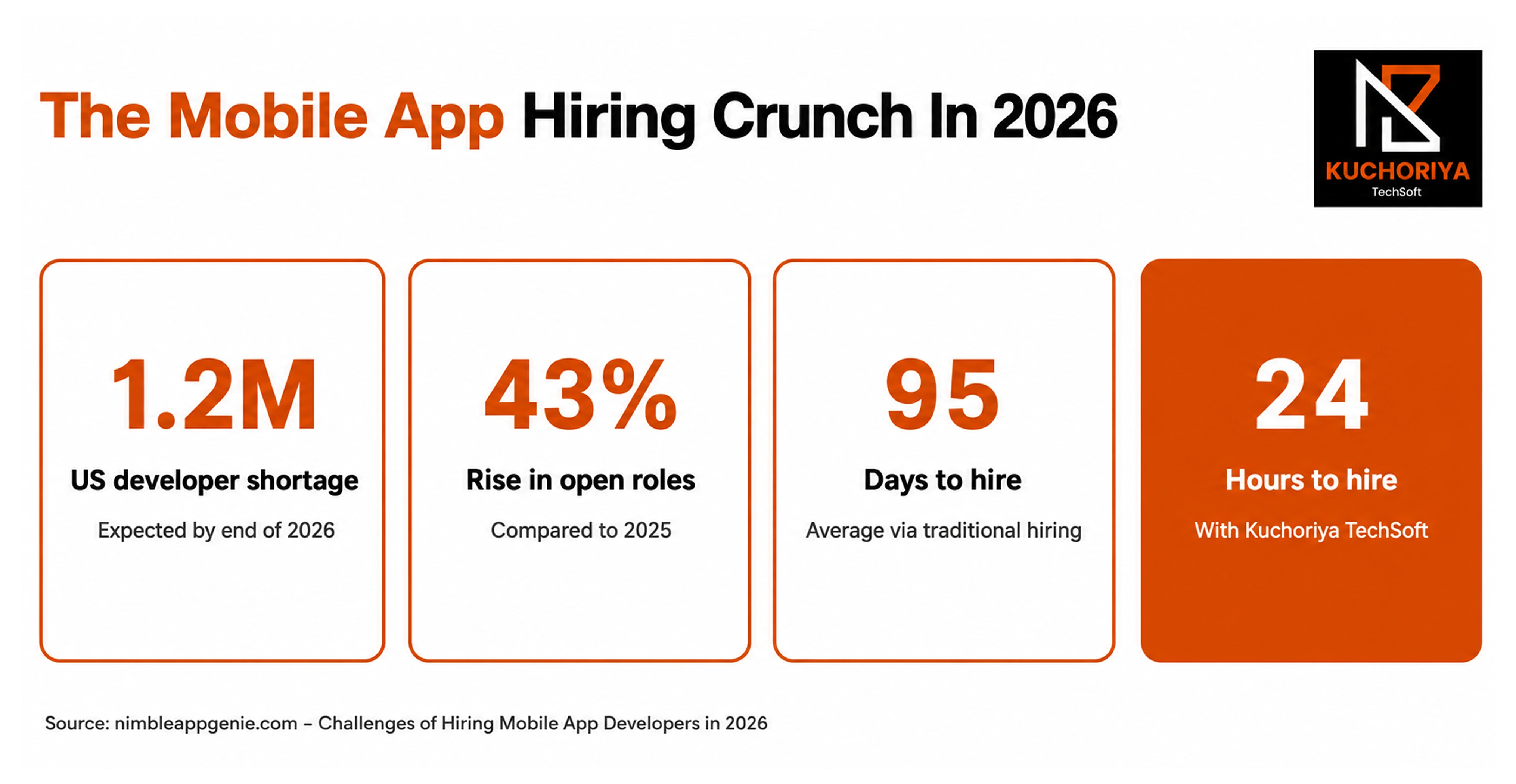
What Actually Happens in a 24-Hour Hiring Process
Most people assume you can't hire the best app developers without weeks of screening first. That's only true if you're starting from a blank slate. Full Scale's data shows vetted staff augmentation models place developers in 14 days on average, against 90+ days for traditional hiring. Compress that further and you get something close to 24 hours.
- No Job Post, Just a Requirement: Share the tech stack and scope directly. Skip the public listing, skip waiting for resumes to trickle in.
- Matched, Not Sourced: App developers on demand come from a pool that's already been screened. Nobody's cold-searching for candidates after you've signed on.
- Terms That Bend With You: With flexible IT staff augmentation, scaling the engagement up or down doesn't mean renegotiating the whole contract every time.
- Global by Default: Some businesses skip local entirely and go straight to a leading app development company in UAE, especially when timezone coverage matters more than being in the same city.
Skills to Check Before You Hire (Not Just Resume Buzzwords)
Plenty of resumes list "Kotlin" or "Swift" somewhere near the top. On its own, that tells you almost nothing about whether the person can build something that actually holds up once real users get their hands on it.
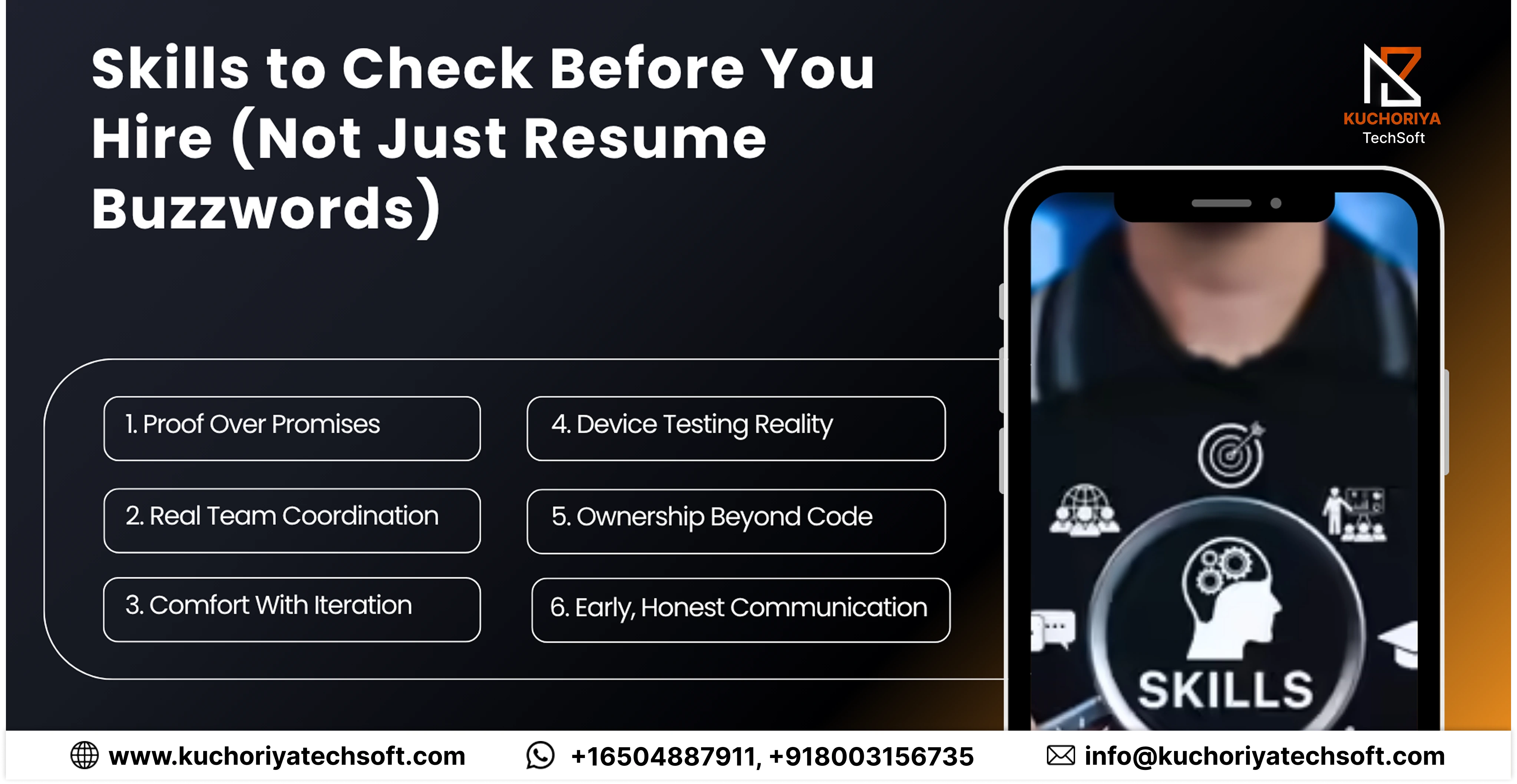
1. Proof Over Promises
Skip the skills list, ask what they've shipped. An expert mobile app development expert has sat through an Apple rejection and fixed it, not just read about it.
2. Real Team Coordination
A skilled software development team actually talks through problems, not just sits in the same Slack channel. That's the real difference when a build stalls at handoff.
3. Comfort With Iteration
Plans change mid-project. A genuine agile app development process means adjusting the moment something's off, not finishing a plan that stopped making sense days ago.
4. Device Testing Reality
Testing only in the simulator usually means the bugs show up after launch, not before. Developers worth hiring run their builds on real devices, old ones included, since that's genuinely where most problems surface.
5. Ownership Beyond Code
Some of the best dedicated app developers in Australia stand out for one reason, they flag problems the day they see them.
6. Early, Honest Communication
You want a developer who speaks up right away, not one who goes quiet for two weeks and drops a surprise.
iOS vs. Android vs. Cross-Platform: Which Do You Actually Need?
Get this wrong and you'll feel it in both your budget and your timeline, way before launch.
Need both stores without building two separate teams? That's usually where top Flutter developers for hire or skilled React Native developers come in, one codebase, two apps, less duplicated work. And if the right mix just isn't sitting in your local talent pool, plenty of companies quietly bring in a trusted remote app development team in Canada instead of waiting around for someone nearby.
Must Read: How to Hire Full-Stack Developers Within 48 Hours from Anywhere in the World
Hire Remote Mobile App Developers: A Guide to Finding Top Talent
Hire Expert Fantasy Sports App Developers to Build Your Platform Today
How to Hire Remote Developers: Step-by-Step Guide
Emerging Tech Skills Worth Asking About (AI, AR/VR, Wearables)
"AI-ready" gets thrown around in almost every interview now. Half the time it means someone watched a tutorial. The other half, they've actually shipped something with it. Worth figuring out which one you're talking to before you sign anything.
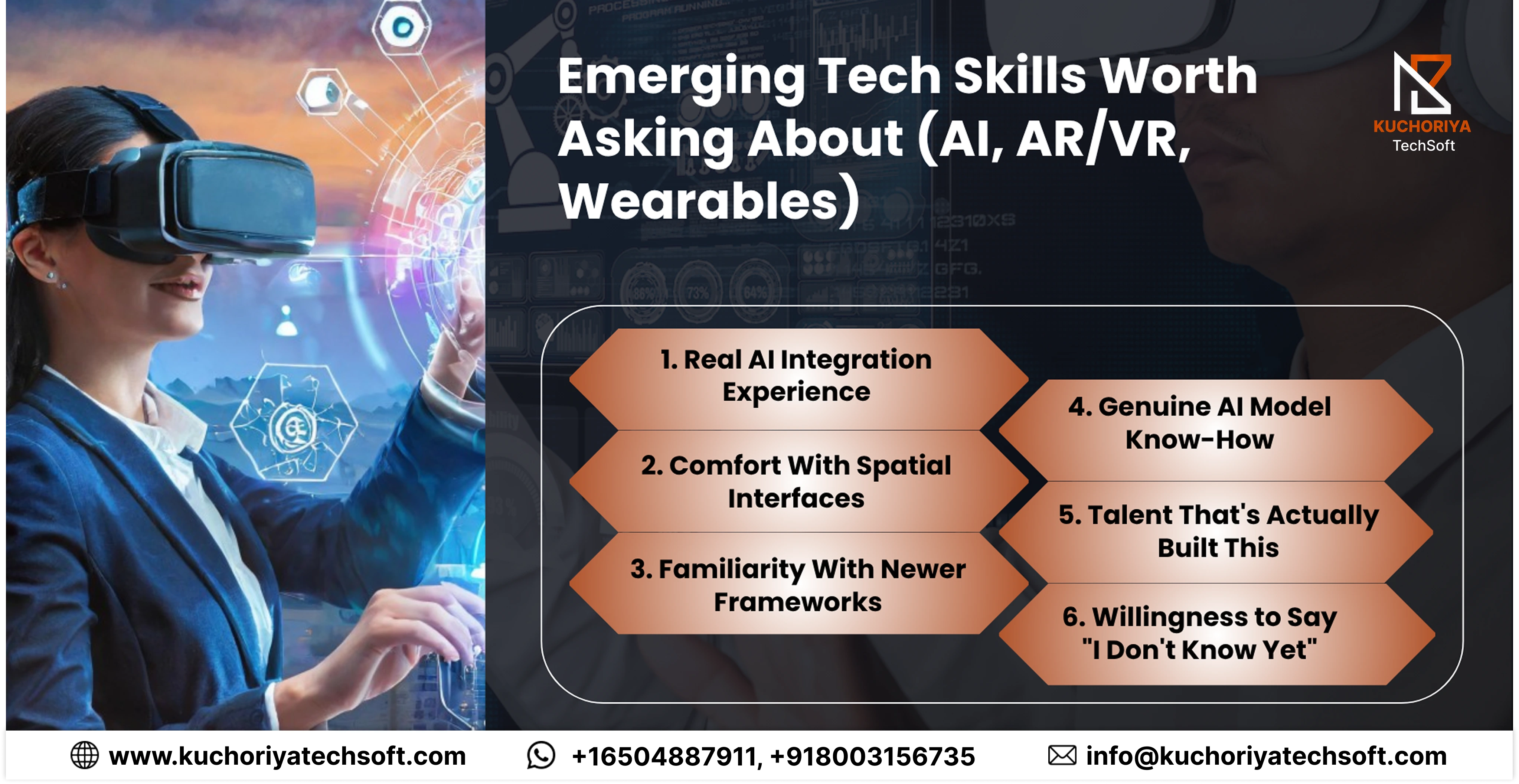
1. Real AI Integration Experience
Anyone building smartwatch or fitness-band features needs advanced AI wearable app development experience, not just familiarity with an SDK. Sensor data and battery constraints break a lot of theoretical knowledge fast.
2. Comfort With Spatial Interfaces
Flat-screen debugging skills don't carry over to immersive AR/VR app development. Depth, tracking drift, motion sickness, these are problems most developers have simply never had to solve before.
3. Familiarity With Newer Frameworks
Some teams are already working with the latest Base44 app development tools, which means asking specifically whether a candidate has touched it, not assuming general experience transfers automatically.
4. Genuine AI Model Know-How
You want to hire expert AI developers who understand model limitations, not just ones who can call an API and call it a feature.
5. Talent That's Actually Built This
This expertise still isn't common everywhere. That's part of why skilled mobile app talent in Singapore keeps coming up in these conversations; the AI-integrated app work coming out of there has genuinely outpaced a lot of other markets.
6. Willingness to Say "I Don't Know Yet"
This space changes every few months. Honestly, the developers worth keeping are the ones who'll admit a gap instead of bluffing through it in an interview.
Where 24-Hour Hiring Works Best (Startups, MVPs, Urgent Sprints)
Most projects don't need a developer in 24 hours. A handful genuinely do, and for those, six weeks of waiting is often enough to lose the moment entirely.
- Startups Racing Toward Launch: Early-stage founders working with best remote mobile app developers can't afford the standard hiring cycle when investor timelines are already tight.
- MVPs That Need to Ship, Not Perfect: Teams building scalable mobile application solutions benefit most when a developer joins fast enough to test an idea before the market moves on.
- Urgent Builds Like Live Tracking Apps: Projects such as real-time taxi booking app development depend on getting the right specialist in fast, since GPS accuracy issues surface early and need immediate attention.
- Multi-Vendor Systems Under Pressure: Multi-vendor food delivery app development often hits scaling issues right after launch, and waiting weeks for a fix isn't really an option.
- UK Businesses Facing Local Talent Gaps: When local hiring stalls, more companies turn to reliable app developers for UK businesses through faster external channels instead of restarting the search from scratch.
Industries That Benefit Most From Fast App Development Hiring
Some industries can shrug off a month's delay. Others feel it in the revenue numbers almost immediately.
- Healthcare, Where Compliance Can't Slip: You want someone into custom healthcare app development who already knows HIPAA and data privacy cold, not a developer piecing compliance together mid-build.
- FinTech, Where Trust Is the Product: Get secure FinTech app development wrong just once and it shows. A single vulnerability can undo months of user trust before you even notice something's off.
- Real Estate, Where Listings Move Fast: Rich media and real-time updates are the whole game in advanced real estate app development. Drag the hiring search out too long, and the listings are stale before the app even launches.
- Retail, Where Checkout Delays Cost Sales: Seamless retail app development basically lives or dies on checkout flow. Every extra day without the right developer is another day of conversions walking away.
- Insurance, Where Claims Can't Wait: Insurance app development runs on fast claims processing and document verification. These need to work correctly the first time, not after three rounds of patching.
- Automotive, Where Connected Features Are Now Standard: Vehicle-connectivity and telematics features are pretty much expected now in automotive app development, and a slow developer search can stall a launch already tied to a hardware release date.
- Media and Entertainment, Where Attention Is Short-Lived: Streaming and content apps in media and entertainment app development live or die by timing. Miss a trending moment because hiring dragged on, and that window doesn't come back.
- Businesses Scaling Across Regions: More companies expanding into new markets lean on affordable mobile development outsourcing in Saudi Arabia, mostly to move fast without bloating the core team.
What It Costs to Hire Fast vs Hire Slow
Speed and cost aren't always trade-offs. Sometimes the slow route ends up costing more once you count everything.
- Lower Cost Doesn't Mean Lower Quality: A top mobile app development company usually prices offshore hiring well below US in-house rates, mainly because you're paying for the build itself, not a full-time local salary plus benefits on top.
- Not Just a Fallback Anymore: More businesses reach for custom mobile app development services first these days, instead of trying local hiring for months and settling for this only after that search fails.
- The Real Cost Hides in the Wait: Every extra week of searching is a week a competitor could already be shipping. Most budgets never actually account for that gap, but it adds up fast.
- Some Teams Skip the Long Search Entirely: Rather than run a three-month local search that might not even close, plenty of companies go straight to an expert app development experts in Dubai hire instead.
Mistakes That Slow Down Even a Fast Hiring Process
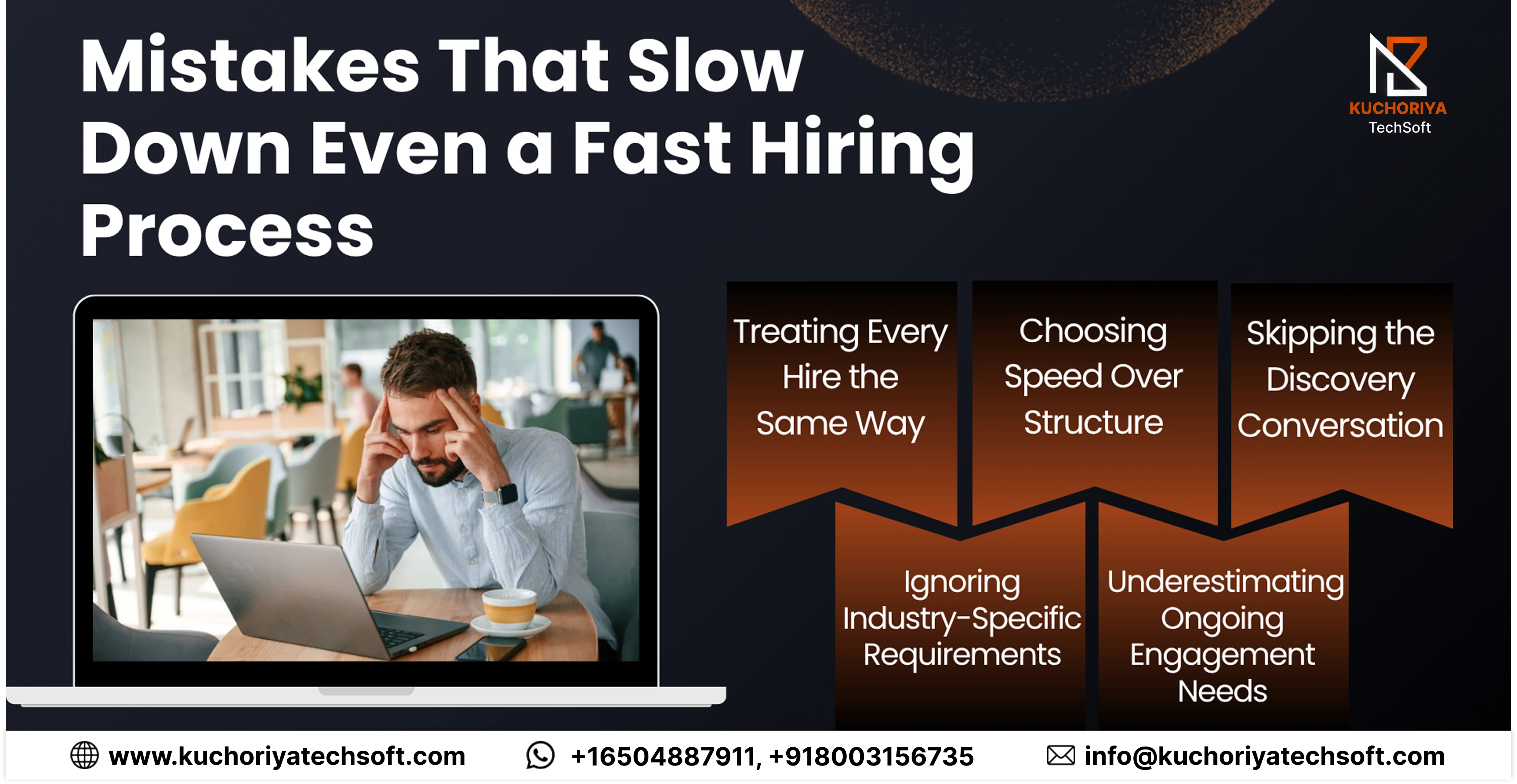
Even a fast hire falls apart if what's around it is messy. Same mistakes, different companies, over and over again.
1. Treating Every Hire the Same Way
Nobody stops to ask whether they need dedicated mobile app developers or just a short-term contractor. Skip that question, and you're often restarting the whole search a month later.
2. Choosing Speed Over Structure
A developer joins fast, but there's no reliable dedicated development team behind them. First unexpected problem shows up, and things stall immediately.
3. Skipping the Discovery Conversation
No professional mobile app consulting upfront, straight into build mode instead. Feels efficient at first. Then week two hits, and half the "clear" requirements turn out not to be clear at all.
4. Ignoring Industry-Specific Requirements
A generalist gets handed something like reliable logistics app development, minus any real-time tracking background. Niche work needs niche experience, general mobile skills alone won't cut it.
5. Underestimating Ongoing Engagement Needs
One developer, hired once, for a product that actually needs constant updates, think engaging fitness app development with its endless content and feature refreshes. That mismatch quietly surfaces a few months after launch.
Read More: How Much Does It Cost to Hire AI Developers?
How to Hire Developers for Your Project: A Complete Guide
Top Freelance Mobile App Developers
How Kuchoriya TechSoft Delivers a Developer in 24 Hours
This isn't a marketing promise, it's a process built specifically to close the gap between "we need someone" and "someone's actually working."
1. A Pool That's Already Vetted
Every developer available to hire trusted mobile application developers through Kuchoriya has already cleared technical screening long before your requirement ever comes in. That's the entire reason 24 hours is realistic instead of a marketing line.
2. Genuine Platform Range
From custom cross-platform development to modern progressive web app development, the pool isn't limited to one framework, so you're not stuck compromising on tech stack just to hit a deadline.
3. Industry Coverage That Goes Beyond Mobile Basics
Whether it's multi-service travel app development or accessible education app development, developers come with actual context for the industry, not just general app-building experience.
4. Full-Stack Bench Strength, Not Just Mobile
Beyond mobile, businesses can also hire top dedicated developers, hire skilled software developers, or hire certified full stack developers for projects that stretch past the app itself.
5. Specialist Roles When You Need Them
Need someone specific? Teams can hire experienced cross-platform developers, hire professional web developers, or hire creative UI/UX designers without running separate searches for each role.
6. Built for Complex, Real-Time Products
Projects like smart grocery delivery app development, real-time fantasy sports app development, and fleet-ready car rental app development get matched with developers who've actually built similar real-time systems before, not generalists learning on the job.
7. Flexible Enough to Scale With You
Flexible on-demand app development path adjusts engagement as it challenges it, scaling a bunch for a bar or down as soon as the pressure block passes, all without renegotiating from scratch.
Ready to Hire a Developer in 24 Hours? Here's Your Next Step
Waiting months for the right developer isn't a strategy; it's a risk most businesses can't afford anymore. Whether you need one specialist or a full team, or you're exploring virtual CTO services to close a delivery gap fast, Kuchoriya TechSoft can have a vetted developer working on your project within 24 hours.
Get in touch with our team today to get started.
Ask about our Referral Partner Program, which is designed for businesses and experts who want to move past the desire to hire and earn from each successful suit.

Frequently Asked Questions
Q. Can you really hire mobile app developers within 24 hours?
A. Yes, if the developer's coming from a pool that's already vetted. Weeks usually go into sourcing and screening. Cut those out and you're left with a same-day hire, nothing shortcut about it, that part just already happened.
Q. What kind of projects actually need a 24-hour hire?
A. Startups chasing a launch date, mostly. Or an MVP somebody wants tested before a window shuts. Fantasy sports apps are a weird but real example, miss the season kickoff and you're basically stuck waiting till next year.
Q. How much does it cost to hire a mobile app developer fast?
A. Varies a fair bit, honestly, platform matters, seniority matters more. Going offshore tends to land you somewhere around 50 to 60 percent cheaper than a US in-house hire. Price drops, quality mostly doesn't.
Q. Can I hire developers for specific platforms like iOS, Android, or Flutter?
A. Yeah. Android and iOS get hired separately all the time, and React Native shows up a lot too when someone wants one build working across both stores instead of managing two.
Q. Is it possible to hire a remote developer instead of someone local?
A. Pretty much standard practice at this point. Local talent isn't always available for a given skill set, so remote fills the gap, and honestly, time zones matter a lot less than people expect once things are set up right.
Q. What happens after the hire, is there ongoing support?
A. Usually doesn't stop at onboarding. Most developers stick around for updates, scaling work, whatever the product needs next. Rarely a one-time handoff and done.